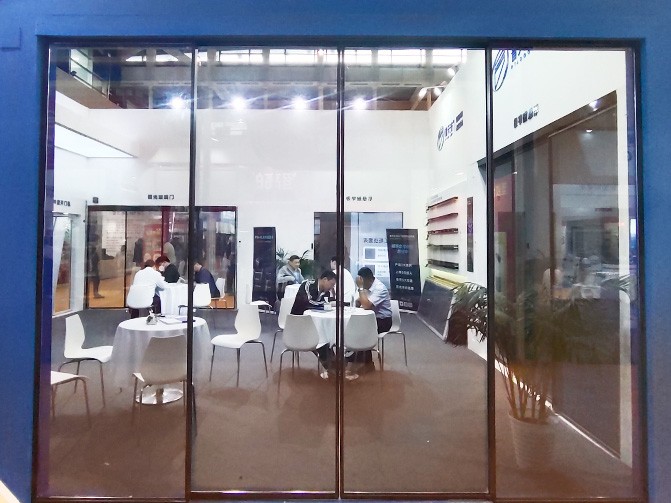


For centuries, the humble door has served as a fundamental barrier between spaces. Its evolution—from simple wooden slabs to hinged, sliding, and revolving variants—has been marked by incremental improvements. Today, a quiet revolution is gliding into our airports, hospitals, luxury hotels, and high-tech facilities: the Magnetic Levitation (Maglev) Automatic Door. This technology transforms a mundane entry point into a marvel of modern engineering, offering unmatched performance, durability, and elegance. This article delves into the science, mechanics, and advantages of this fascinating innovation.
From Friction to Flight: The Core Principle
Traditional sliding doors rely on physical wheels or rollers that move along a track. This contact inevitably creates friction, leading to wear and tear, noise, accumulation of dirt in the tracks, and increased energy consumption to overcome resistance.
Maglev doors eliminate this friction entirely by borrowing a principle famously used in high-speed trains: magnetic levitation. In essence, they make the door panel "fly" along its path. This is achieved through magnetic repulsion.
The system typically consists of two key components integrated into the door's structure:
1. Guidance Rail (or Track): This rail contains an array of permanent magnets, often high-strength neodymium magnets, arranged with their poles aligned to create a continuous magnetic field.
2. Door-Mounted Modules: Attached to the top of the door panel are modules housing magnets with the same polarity as those in the rail. According to the basic law of magnetism (like poles repel), a powerful repulsive force is generated between the rail and the door.
This force is precisely calibrated to levitate the door panel, creating a small but crucial air gap (typically a few millimeters). The door is now suspended without physical contact, poised for movement with minimal resistance.
The "Automatic" Part: Propulsion and Control
Levitation is only half the story. The door also needs to open and close smoothly, swiftly, and safely. This is where linear motor technology comes into play.
Embedded within the same guidance rail system are components of a brushless linear synchronous motor. Think of it as a conventional rotary electric motor sliced open and laid out flat. The rail contains a sequence of electromagnetic coils (the stator). The door carries a set of permanent magnets (the forcer).
When the automatic door's sensor (be it motion-activated, infrared, or pressure-sensitive) signals the need to open, a controlled electrical current is sent to the coils in the rail. This creates a traveling magnetic wave that "pulls" or "pushes" the magnets on the door panel, propelling it forward or backward with precise control. The absence of mechanical contact points like gears or belts makes this propulsion exceptionally smooth and silent.
An onboard or centralized microprocessor acts as the brain. It manages the motor's power, controlling not just speed but also the door's acceleration and deceleration profiles. This ensures gentle starts and stops, and it constantly monitors the door's position for perfect alignment.
Key Advantages: Why Maglev?
The integration of maglev and linear motor technology yields significant benefits:
1. Whisper-Quiet Operation: No grinding wheels or rattling tracks. The movement is virtually silent, ideal for libraries, hospital wards, and luxury environments.
2. Exceptional Durability and Low Maintenance: With no contacting parts to wear out, there is dramatically less need for replacements of rollers, belts, or tracks. The system is also immune to problems caused by dust or debris clogging a track.
3. Enhanced Hygiene and Cleanability: The absence of a floor track and the sealed nature of the overhead system prevent the accumulation of dirt, bacteria, and liquids. This is a critical advantage in healthcare and food service settings.
4. Superior Energy Efficiency: Overcoming friction consumes a lot of energy. Maglev doors require significantly less power to operate, as energy is used primarily for propulsion and levitation control, not fighting mechanical resistance.
5. Robust Performance and Safety: The direct-drive linear motor allows for faster response times and more reliable operation in high-traffic areas. The control system can easily integrate advanced safety sensors to detect obstacles with high sensitivity, as there is no inertia from heavy motors or drive belts to overcome in an emergency stop.
6. Architectural Flexibility and Aesthetics: Designers appreciate the clean, minimalist look. The door can often be made of heavier, more impressive materials (like full-height glass) without taxing the system, enabling stunning visual statements.
Considerations and the Future
Maglev automatic doors represent a premium solution. Their initial cost is higher than that of conventional automatic doors, making them more suited for commercial, institutional, or high-end residential applications where long-term benefits outweigh the upfront investment.
The technology continues to evolve. Future developments may include:
Energy Harvesting: Using the motion of the door to generate small amounts of electricity back into the system.
Advanced Smart Integration: Deeper connectivity with building management systems for predictive maintenance, personalized access control, and traffic flow optimization.
Enhanced Materials: Use of even stronger and lighter materials for greater efficiency and design possibilities.
Conclusion
The magnetic levitation automatic door is a perfect example of applied physics elevating everyday functionality. By harnessing the invisible force of magnetism to banish friction, it delivers a combination of silence, reliability, cleanliness, and sleek design that traditional doors cannot match. As the technology matures and becomes more accessible, we can expect this graceful, silent glide to become the new standard for automated entries, seamlessly connecting spaces in our increasingly sophisticated built environment. It is not just a door opening; it's a demonstration of engineering ingenuity in motion.
The above content is sourced from the Internet. Please contact us for deletion if it infringes on your rights and interests!