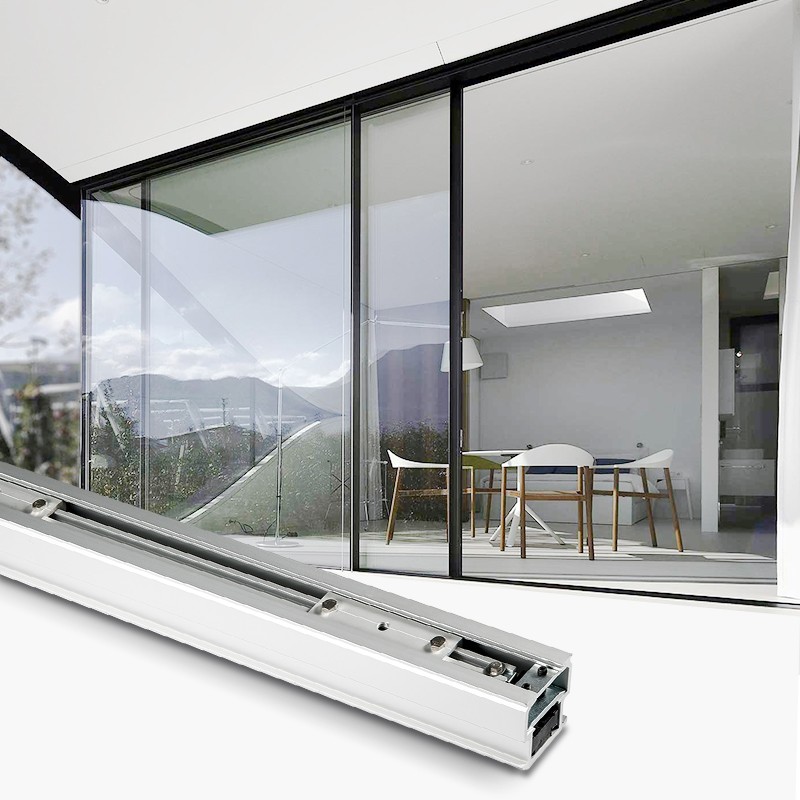


Automatic swing doors have become an indispensable part of modern buildings due to their convenient and efficient performance. Behind their smooth operation lies a combination of multiple technical advantages, which enable them to adapt to diverse application scenarios ranging from commercial buildings to public facilities. The following sections elaborate on their core technical features.
1. Advanced Drive and Precise Control System
The operation of automatic swing doors relies on a motor-driven system, which serves as the core power source. Unlike traditional manual doors, these doors adopt high-performance motors that provide stable torque to drive the door leaf movement. Equipped with a sophisticated control module, the system can accurately regulate key operating parameters, such as opening and closing speed, buffer strength, and holding time. For instance, in crowded areas like office building lobbies, the door can be set to open quickly to improve traffic efficiency; while in quiet places such as libraries, the closing speed can be slowed down to reduce noise and ensure a smooth transition.
2. Diverse Sensing Modes for Adaptive Detection
Sensing technology is a vital component that enables the "automatic" function of swing doors, and various sensing modes are available to meet different scenario requirements. Infrared sensors, which detect the heat and movement of human bodies, are widely used in general public areas for their reliable performance. Microwave sensors, on the other hand, utilize electromagnetic waves to identify moving objects, making them suitable for environments with complex lighting conditions. For high-end scenarios like luxury hotels or intelligent office buildings, face recognition sensors or card-reading sensing systems can be integrated to achieve personalized access control, ensuring both convenience and access security.
3. Intelligent Interconnection Capability
With the development of smart building technology, Automatic swing doors have evolved from independent devices to an integral part of the intelligent ecosystem. They support interconnection with multiple systems, including elevator control systems, security alarm systems, and smart home platforms. For example, when a user unlocks the door via a fingerprint scanner, the door can automatically open while sending a signal to the elevator to call it to the current floor. In shopping malls, the doors can be linked with the fire alarm system—when an alarm is triggered, all doors will automatically open to facilitate evacuation, enhancing the coordination of the building's safety system.
4. Optimized Operation Performance
The technical design of automatic swing doors focuses on improving user experience through optimized operation performance. The adoption of high-quality guide rails and wear-resistant components reduces friction during door movement, ensuring smooth and stable operation without jitter. Meanwhile, noise reduction technology is applied to the motor and transmission structure, minimizing the sound generated during opening and closing, which is particularly important for noise-sensitive environments such as hospitals and hotel rooms. Additionally, the door leaf is designed with a reasonable weight distribution, which not only improves the stability of movement but also reduces the load on the motor, extending the service life of the equipment.
5. Environmentally Adaptive and Energy-Saving Design
To adapt to different environmental conditions, automatic swing doors are equipped with targeted technical designs. In humid areas like swimming pools or coastal regions, the door frame and hardware components are made of corrosion-resistant materials such as stainless steel to prevent rust and damage. In cold regions, the door is designed with enhanced sealing strips to reduce heat loss and maintain indoor temperature stability. Moreover, energy-saving technology is integrated into the control system—the door will automatically enter a low-power standby mode when there is no pedestrian activity for a period, effectively reducing energy consumption without affecting normal use.
In summary, the technical features of Automatic swing doors are characterized by precise control, diverse adaptation, intelligent interconnection, and optimized performance. These technical advantages not only provide convenient and comfortable access experience for users but also make automatic swing doors widely applicable in various fields, contributing to the intelligence and humanization of modern buildings.
The content above is sourced from the internet. If it infringes upon your rights and interests, please contact us for removal!