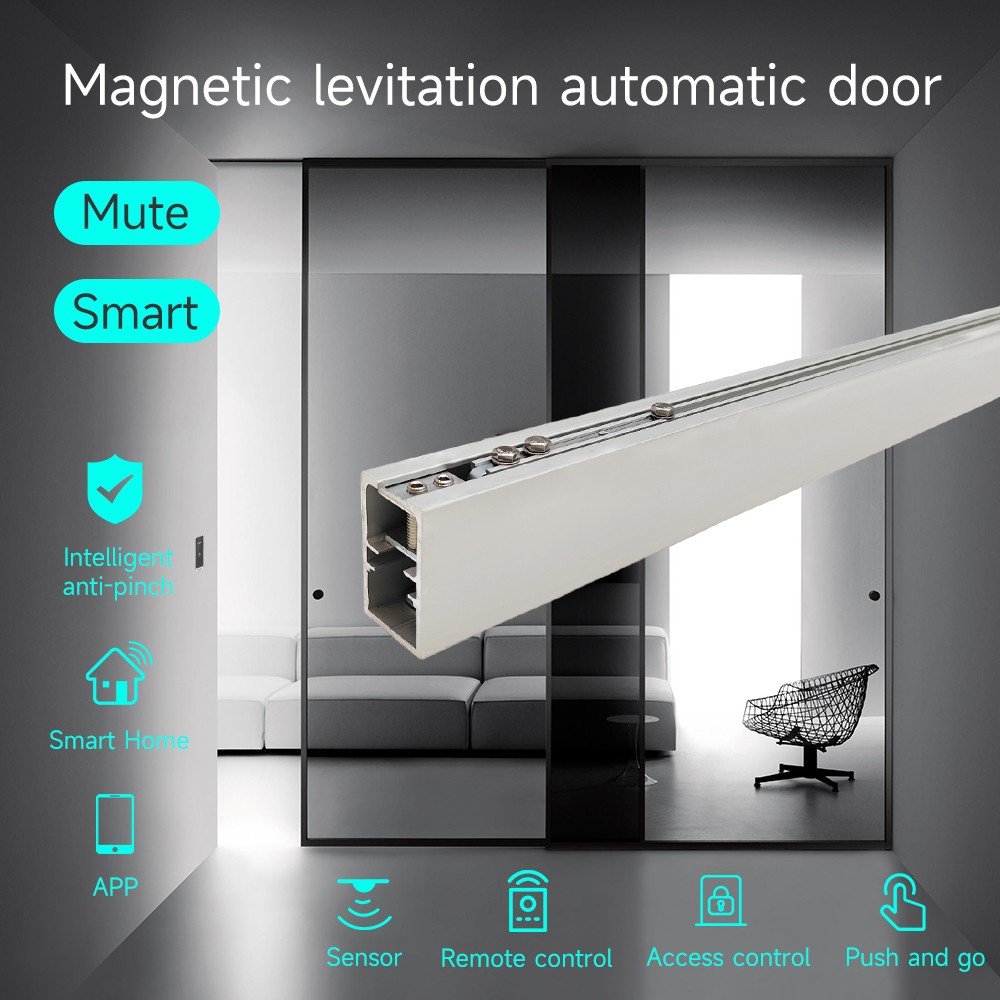


From the morning rush hour in office buildings to the round-the-clock access in hospitals, automatic sliding doors have become a standard feature of modern architecture. Abandoning the cumbersome pushing and pulling of traditional manual doors, they take technology as their core and demonstrate multiple advantages such as high efficiency, safety, and energy conservation during opening and closing, profoundly changing people's access experience.
High Efficiency and Convenience
High efficiency and convenience are the most intuitive advantages of automatic sliding doors. In scenarios with dense human flow like subway stations and large shopping malls, they require no manual operation. Equipped with infrared or microwave sensing systems, they can detect pedestrian signals and respond quickly within 0.1 seconds. Their opening speed can reach 0.5 meters per second, and the hourly passenger flow of a single door exceeds 2,000 people, which is more than three times that of traditional manual doors. Especially during commuting peaks, multiple linked sliding doors can automatically adjust the opening width according to the density of human flow, avoiding congestion, making access as smooth as flowing water, and saving precious time for the fast-paced life.
Safety Protection
The safety protection capability is regarded as the core highlight of automatic sliding doors. They are equipped with multiple safety guarantee systems. When obstacles are detected during the operation of the door body, a reverse operation mechanism will be triggered immediately, and the anti-pinch force is controlled within a safe range, effectively avoiding the risk of pinching the elderly, children, and pets. In special places such as laboratories and data centers, the sealed design of sliding doors can isolate dust and air exchange, and realize authority control in conjunction with access control systems, which not only ensures the safety of personnel but also maintains the stability of the internal environment. In emergency situations such as fires, they can also automatically unlock and remain open, creating a green channel for escape.
Energy Conservation
The energy-saving feature makes automatic sliding doors the first choice for green buildings. Different from the energy loss caused by frequent opening and closing of traditional doors, they adopt high-efficiency sealing strips and quick-closing technology, which can reduce the indoor and outdoor air exchange by 60%. In the scenarios of heating in winter or cooling in summer, they can reduce the air-conditioning energy consumption by more than 30%, and long-term use can save a lot of costs for building operation. Some high-end models are also equipped with photovoltaic power supply modules, which use clean energy for driving, further practicing the concept of environmental protection.
Durability and Easy Maintenance
In addition, automatic sliding doors also have the advantages of durability and convenient maintenance. Their core components are made of wear-resistant alloy materials, with a service life of more than 100,000 operations. Daily maintenance only requires regular cleaning of sensors and tracks, resulting in extremely low maintenance costs. At the same time, they come in a variety of design styles, and materials such as glass and metal can be perfectly integrated with various architectural styles, enhancing the overall texture of the place.
The advantages of automatic sliding doors are essentially the embodiment of technology serving life. They respond to needs with high efficiency, protect peace of mind with safety, and practice responsibility with energy conservation. Between ordinary opening and closing, they inject convenience and warmth into modern life and become the most intimate "bridge" between buildings and people.
The above content is sourced from the Internet. If it infringes on your rights and interests, please contact us for deletion!